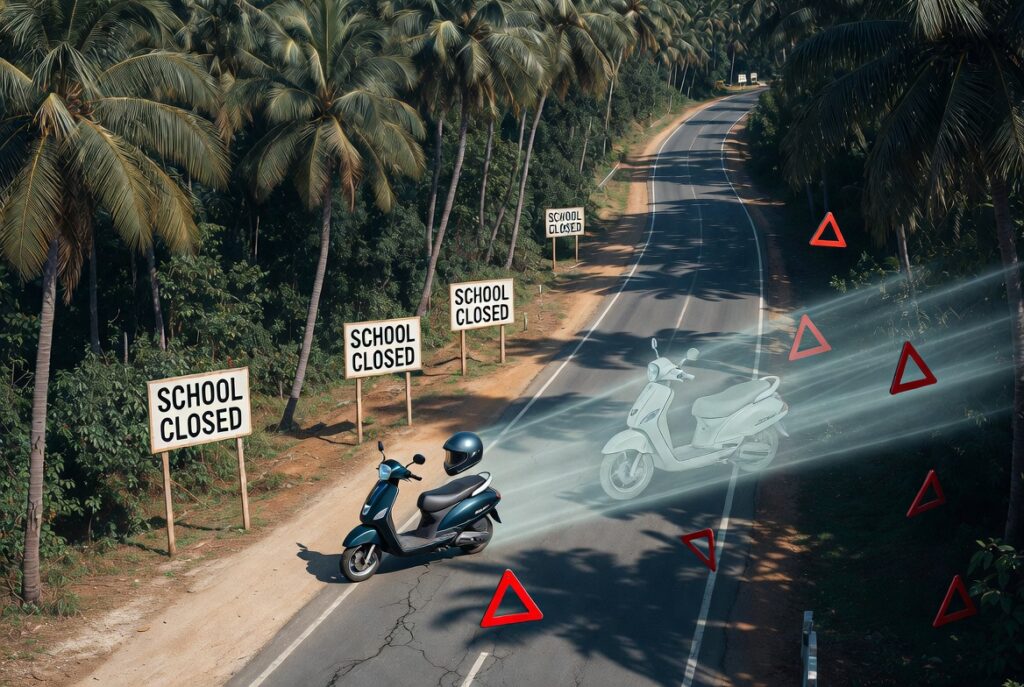
How Teen Accident Deaths Actually Happen – The Step-by-Step Mechanism
The Hidden Danger of Summer Vacations in India: How Teens Are Dying in Secret Bike Accidents
Every year when schools close for mid-summer vacation in Kerala, parents breathe a sigh of relief. Children finally get time to relax. But for many families in Thiruvananthapuram, Kozhikode, and across the state, this period has become a season of unimaginable grief. Teen road accidents – especially involving bikes and scooters taken secretly from home – are claiming young lives at an alarming rate.
This is not another “don’t ride fast” lecture. This is the exact mechanism of how 13-18 year olds are dying in these crashes. How a simple decision to take dad’s bike without permission turns into a fatal sequence in seconds. And most importantly, how we can stop it.
How Teen Deaths Actually Happen – The Step-by-Step Mechanism
The teenage brain is still developing. The prefrontal cortex, responsible for risk assessment and impulse control, is not fully mature until the mid-20s. During summer vacation, the usual structure of school timings disappears. No bells, no homework pressure, and friends are free to message “Bro, come for a short ride.”
Step 1: The Secret Take. Parents have clearly said “No” because the child has no licence or experience. The bike or scooter keys are hidden in a drawer or under the seat. But the 15-year-old knows exactly where they are. He waits until parents are busy or sleeping. No one is told. This secrecy is the first link in the chain.
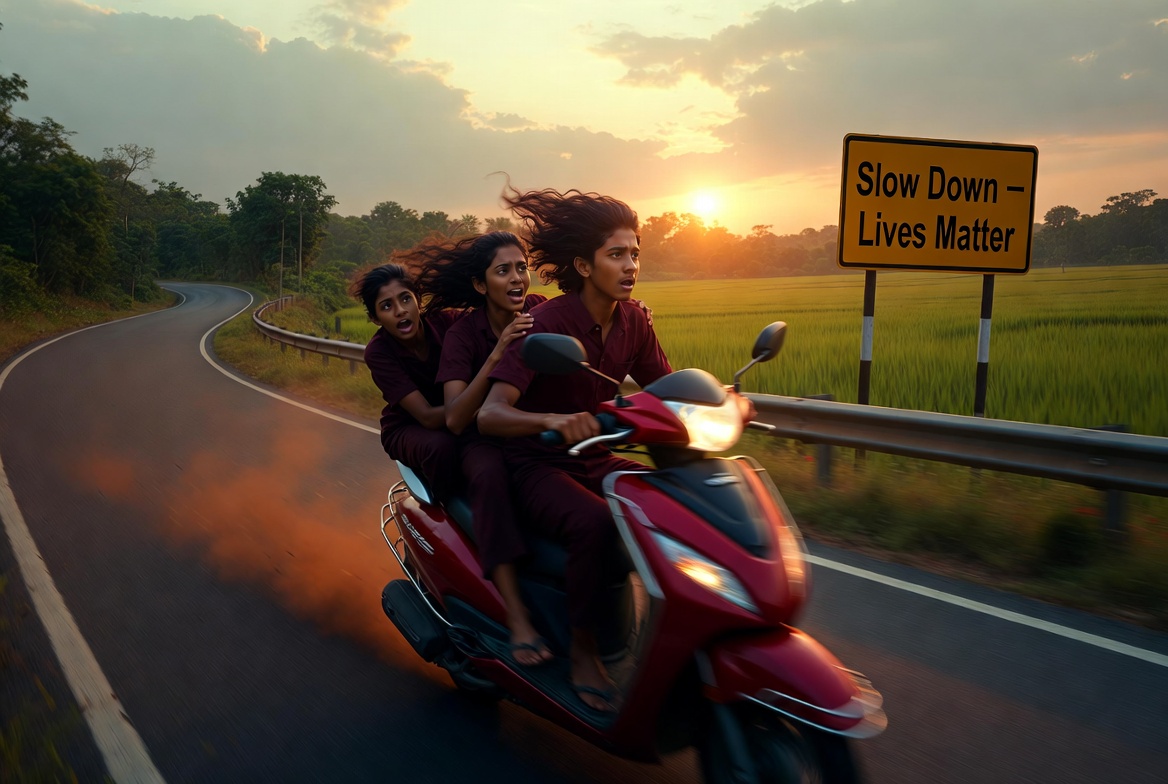
Step 2: No Helmet + Immediate Speed. The helmet feels heavy and “uncool” in front of friends. Peer pressure kicks in hard – “Don’t be a kid, just ride.” Within minutes the speedometer crosses 60-70 km/h on roads that feel empty during vacation. The rider has little practice with sudden braking or curves.
Step 3: Loss of Control in a Split Second. A small pothole, an unexpected vehicle from a side road, or a slight wobble at high speed. The lightweight two-wheeler skids. The teen tries to correct but lacks the muscle memory. Result: head-on with a lorry, crash into an electric pole, or fall into a drain. Without a helmet, the head takes the full impact. Brain trauma or instant crush injuries follow. Death often occurs on the spot or within hours.
Step 4: Parents Discover Only After the Call. The phone rings from police or hospital. “Your son’s vehicle met with an accident.” The family had no idea the child had left. This pattern repeats because the child was too scared to ask permission.
National data and Kerala police records show two-wheelers cause the majority of youth fatalities. Helmets are missing in most fatal cases. Summer vacation multiplies the risk because free time + peer groups + empty roads create the perfect storm.
Real Cases from the Last Month That Will Shock You
Let us look at actual incidents reported in March 2026 – right as summer vacations began.
First, the Nedumangad tragedy on March 9. Four young men from Uzhamalakkal – Rajesh (21), Binoy (20), Sreelal (28), and Abhinav (21) – were riding two bikes on the Nedumangad-Aryanad road near Kulappada Government Hospital around 10:45 pm. They collided head-on at high speed. All four died. Police confirmed excessive speed and loss of control. Late-night ride during vacation period. Families learned only after the crash. This is exactly the secret group ride pattern we see repeatedly.
Second, in Kaniyapuram near Thiruvananthapuram (around March 12), a young rider named Afran from Pallinada collided with a cement-laden lorry at Masthanmukku. The motorcycle got trapped underneath the heavy vehicle. The rider died on the spot. Again, a local youth taking a vehicle without full experience on a main road. The pattern of under-estimating danger is clear.
Third, the most heartbreaking recent case happened on March 18 in Koyilandy, Kozhikode. Three MBBS students from Malabar Medical College – Nanda Kishore (22), Abhiyan Rahman (19), and Abhinav Suresh (19/20) – were on an electric scooter around 1:40 am. The vehicle lost control, slammed into an electric pole, and fell into a nearby drain. All three died instantly. Over-speed was the main cause. These were medical students – the very people who should know better – yet vacation freedom and peer thrill overrode caution.
These are not isolated stories. They are the visible tip of a pattern where children take vehicles secretly because they are sure parents will say no. The result is the same every time: families shattered, futures erased in seconds.
Who Should We Educate – Kids, Parents, or Society?
The answer is everyone, but the biggest responsibility lies with parents.
Kids need to understand the exact sequence above. Not through fear, but through cold facts: “Your brain is still wiring itself. That 70 km/h thrill lasts three seconds; the consequences last forever.” Teach them to recognise peer pressure and say “No” without losing face.
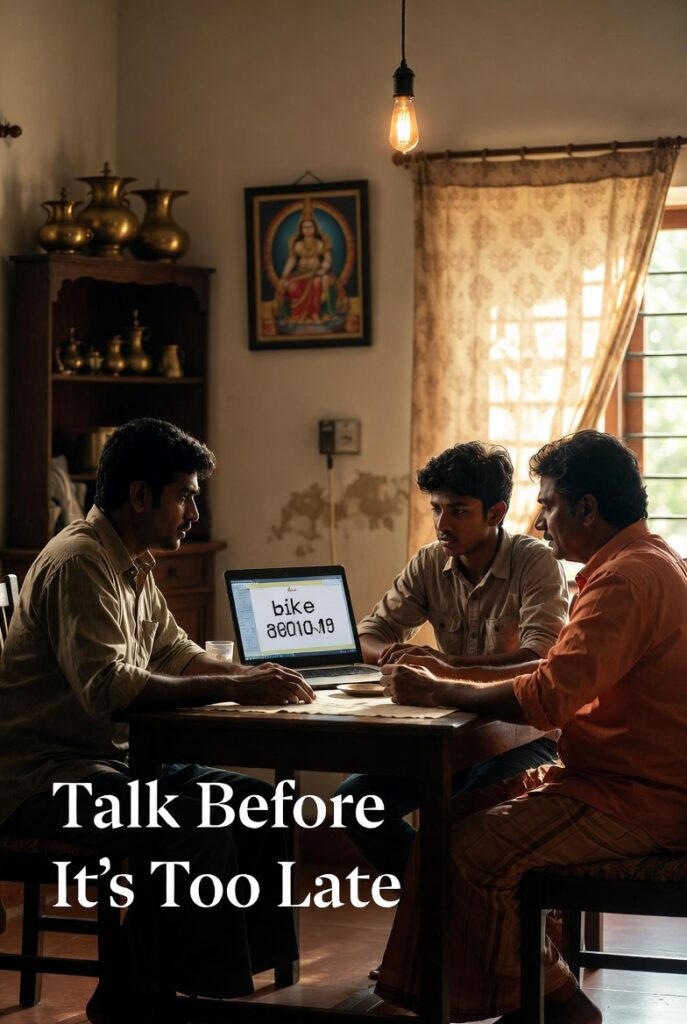
Parents carry the heaviest load. Lock keys properly, yes – but more importantly, build trust. Have real conversations: “I know you want freedom. Let’s learn together safely after you get a licence.” Show them these real accident reports instead of just scolding. Many deaths happen because children hide their plans out of fear of punishment.
Society must change the “cool rider” culture. Friends who dare others to speed are enablers. Social media reels glorifying stunts without helmets must be called out.
Government Responsibility – What Is Being Done in Kerala?
The Motor Vehicles Department and Kerala Police are not silent. In 2025, road accident deaths actually declined to 3,733 even as total accidents rose slightly – showing some campaigns are working. The Student Police Cadet programme and Road Safety Cadet initiatives in schools teach exactly these mechanisms. Special patrols during vacation periods, helmet enforcement drives, and awareness rallies happen regularly.
Yet more is needed. Stricter checks on minors riding, mandatory safety classes during summer holidays, and widespread video campaigns showing real crash sequences (not just slogans) would save more lives. The government has the data and the machinery – it must now focus on the “secret ride” pattern specifically.
Practical Awareness That Actually Saves Lives
Here are awareness steps that work because they address the real mechanism:
- Parents: Install a simple key tracker app or physical lock box. But daily, spend 10 minutes talking – not lecturing. Ask “What would happen if…” using the real cases above.
- Teens: Before taking any vehicle, pause for 10 seconds and visualise the sequence – pothole, skid, head impact. That pause has saved lives in other countries.
- Schools & Communities: Organise vacation-time workshops using the exact Nedumangad and Koyilandy stories (with family permission). Show the brain development science.
- Everyone: Share factual reports instead of graphic videos. Knowledge, not fear, changes behaviour.
Summer vacation should be about memories, not mourning. The deaths we see every year are preventable when we understand exactly how they happen instead of repeating empty warnings.
Talk to your children today. Lock the keys, yes – but open the conversation more. One honest discussion can break the chain that leads from “just a short ride” to a police call at midnight.
Kerala roads do not have to claim another young life this vacation. The power to stop it lies with every parent, every teen, and every responsible citizen who chooses awareness over silence.
#teen road accidents Kerala, #bike accidents teens, #summer vacation risks, #scooter deaths Kerala, without helmet accidents, #secret bike rides, parental responsibility, #Kerala road safety, #MVD campaigns, #peer pressure accidents, #bike accidents teens Kerala, #scooter deaths without helmet, #secret vehicle taking kids, #road safety Kerala teens, #parental responsibility bike accidents, #government road safety campaigns Kerala